A tornado watch hung over North Texas on Monday, November 24, 2025, as violent storms churned through the region—dumping up to 4 inches of rain, hurling baseball-sized hail, and briefly threatening tornadoes near Palestine. The National Weather Service issued the watch for Anderson County, Freestone County, and areas southeast of the Dallas-Fort Worth Metroplex, lasting until 7:00 p.m. CST. Meanwhile, CBS News reported the watch extended across most of North Texas, expiring an hour earlier at 6:00 p.m. The storm didn’t just scare residents—it paralyzed travel, flooded roads, and turned the region’s airports into the worst-performing in the country.
Storms Slam North Texas, Paralyzing Travel
By 8:00 a.m., the heaviest rain had already soaked Wise County and Denton County, where hailstones the size of golf balls shattered windshields and dented cars. The National Weather Service described the overall threat as “low,” but meteorologist Ali Turiano of Fox4News warned of a “low but real” tornado risk south of I-20, particularly around Palestine. The storm’s core moved east by noon, leaving behind a trail of standing water and debris.On Interstate 35E near Inwood Road in Dallas, a clogged drainage system turned the highway into a river. Traffic expert Chip Waggoner told Fox4News vehicles were crawling at 7 to 8 mph—down from 65. “It wasn’t just rain,” he said. “It was a hydraulic event. The system wasn’t built for this kind of deluge in under two hours.”
Airports Grounded Amid Chaos
While the Federal Aviation Administration lifted its ground stop at Dallas Love Field Airport (DAL) by mid-morning, Dallas/Fort Worth International Airport (DFW) remained in chaos. Flights were delayed an average of 50 minutes, with over 200 cancellations logged by 3:00 p.m. According to FAA tracking, both DFW and DAL ranked #1 and #2 in U.S. delays that day—beating even Atlanta and Chicago. “We’ve seen storms before,” said a DFW operations manager who asked not to be named. “But this one hit right when the holiday rush started. It’s a nightmare.”Travelers arriving for Thanksgiving were left stranded. “I had a 9 a.m. flight to Chicago,” said passenger Maria Lopez of Fort Worth. “By noon, I was on the phone with three airlines, watching the rain come down harder than anything I’ve seen since ’18.”
Thanksgiving Weather: A Cold Snap Coming
The good news? The worst is over. A strong cold front is barreling into North Texas later this week, with temperatures expected to plunge into the 30s Fahrenheit by Thursday morning, Thanksgiving Day. By afternoon, skies will clear and highs will climb to the low 60s—a dramatic drop from Monday’s 72-degree high. “It’s going to feel like a whole different season,” said National Weather Service forecaster Dr. Lena Ruiz. “People are going to need coats, not jackets.”By Friday, November 28, cloud cover will thicken again, and another round of light rain is expected Saturday through Sunday, November 29–30. But don’t expect another 4-inch deluge. “This next system is more of a drizzle than a downpour,” Ruiz added. “It’ll be wet, but not destructive.”
What’s Next? A Broader Storm Pattern
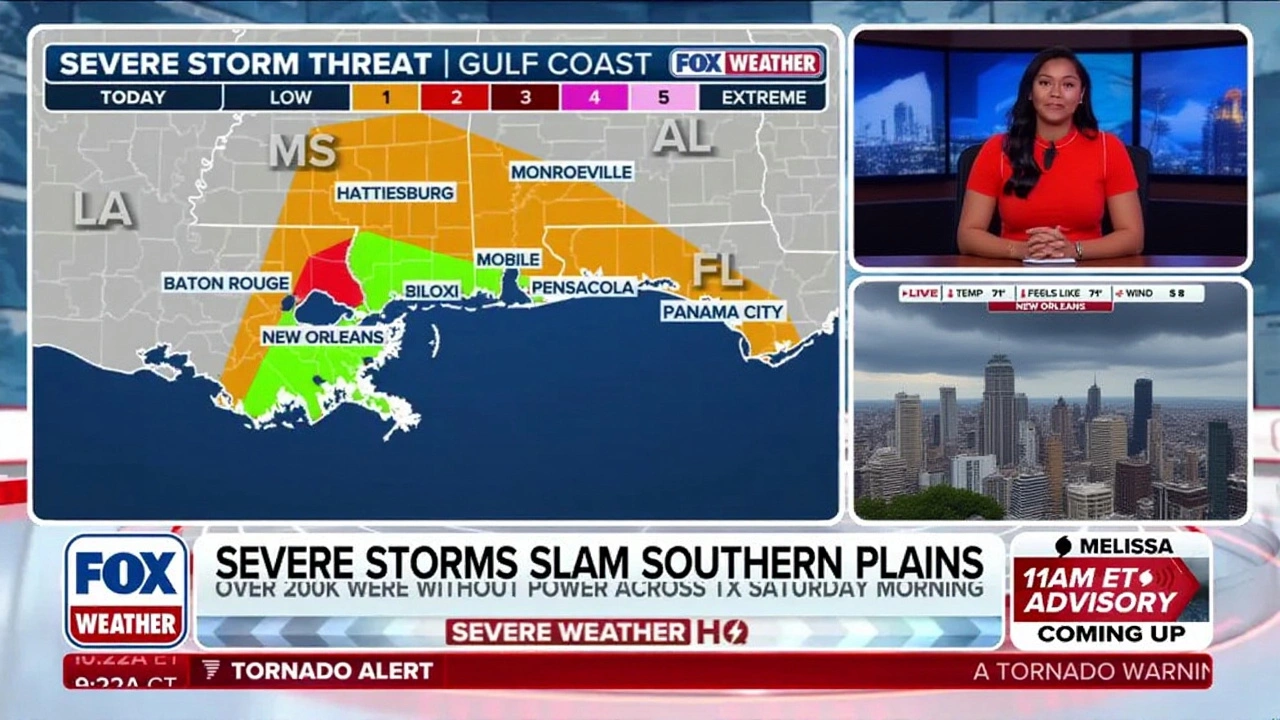
The same weather system that soaked North Texas didn’t stop there. By Tuesday, November 25, the National Weather Service issued new alerts for eastern Mississippi and Alabama, where isolated tornadoes were possible. Meanwhile, a separate system was dumping heavy snow across the northern Plains and Upper Midwest, with blizzard conditions expected to reach the Great Lakes by Wednesday and linger into Thanksgiving Day. “This isn’t just a Texas storm,” said meteorologist Ruiz. “It’s part of a continental pattern—one that’s shifting fast.”For now, North Texas residents are breathing easier. Power outages were minimal. No fatalities were reported. But the damage to infrastructure—clogged drains, flooded highways, overwhelmed airports—is a reminder: our systems aren’t built for this new normal.
Frequently Asked Questions
Why were Dallas airports the worst in the U.S. for delays on November 24, 2025?
Both Dallas/Fort Worth International Airport (DFW) and Dallas Love Field (DAL) are among the busiest in the country, handling over 1,500 daily flights. The combination of heavy rain, low visibility, and wind shear forced ground stops and reroutes. With DFW alone processing over 60,000 passengers daily, even a 50-minute delay cascaded into hundreds of cancellations—pushing it to the top of FAA delay rankings.
Was there an actual tornado in North Texas on November 24, 2025?
No confirmed tornado touchdowns were reported in North Texas that day. The National Weather Service issued a Tornado Watch, meaning conditions were favorable for rotation, but no funnel clouds touched down. However, radar did detect several mesocyclones near Palestine and Anderson County, prompting emergency alerts. The low threat level was accurate—luck held.
How does this compare to past severe weather in North Texas?
The November 24, 2025 storm was similar in rainfall to the 2019 Memorial Day floods, but less destructive overall. The 2019 event dropped over 10 inches in some areas and caused 12 fatalities. This year’s storm was shorter-lived and better forecasted. Still, the fact that the same drainage systems failed in Dallas after six years of infrastructure upgrades is alarming. Climate scientists note Texas is seeing 30% more extreme rainfall events than in the 1990s.
What’s the forecast for Thanksgiving Day in North Texas?
Thanksgiving Day, November 27, 2025, will be crisp and clear. Morning lows will dip into the upper 30s, with afternoon highs reaching the low 60s—perfect for turkey dinners outdoors. Wind speeds will stay under 10 mph. This is a sharp contrast to the previous week’s humidity and rain. It’s the kind of weather families remember—cold enough for scarves, but not bitter. The National Weather Service says it’s one of the most favorable Thanksgiving days in a decade.
Why did the flood watch end earlier than the tornado watch?
Flood threats are tied to rainfall accumulation and drainage capacity. By 3:00 p.m., the heaviest rain had moved east, and runoff was draining into creeks and reservoirs. Tornado risk, however, depends on atmospheric instability and wind shear—conditions that lingered longer over southeastern counties like Anderson and Freestone. The tornado watch stayed active until 7:00 p.m. because the upper-level winds remained favorable for rotation, even as the rain stopped.
Are future storms like this becoming more common in North Texas?
Yes. Since 2010, the number of extreme rainfall events (over 4 inches in 24 hours) in North Texas has increased by 42%, according to NOAA data. Warmer Gulf waters are feeding more moisture into the atmosphere, and climate models predict this trend will continue. The National Weather Service now issues more frequent Tornado Watches and Flash Flood Warnings than it did a decade ago. Infrastructure is playing catch-up—and it’s not always fast enough.